We all know that earth and other planets revolve around the sun.
The understanding of our solar system and the position of Earth within it has dramatically evolved over centuries. In ancient times, the predominant belief was that the Earth was the center of the universe, encapsulated within what is known as the geocentric model. This worldview was deeply rooted in philosophical, religious, and scientific thought, with figures like Ptolemy offering detailed models to support the idea that all celestial bodies, including the Sun, revolved around the stationary Earth.
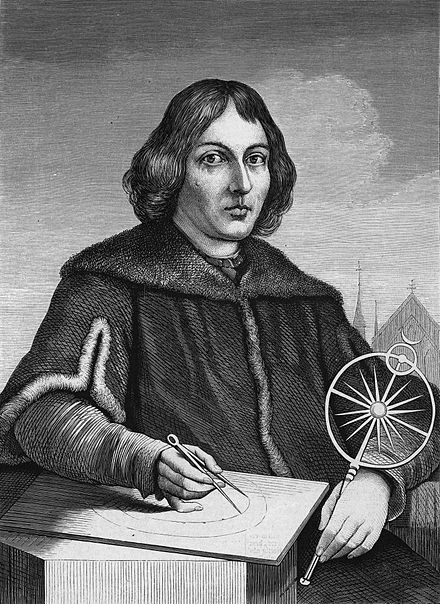
This view persisted for centuries until a revolutionary shift occurred thanks to the work of the Polish mathematician and astronomer, Nicolaus Copernicus. Born on February 19, 1473, Copernicus would become a seminal figure in the history of science, laying the groundwork for what is now known as the heliocentric model of the solar system.
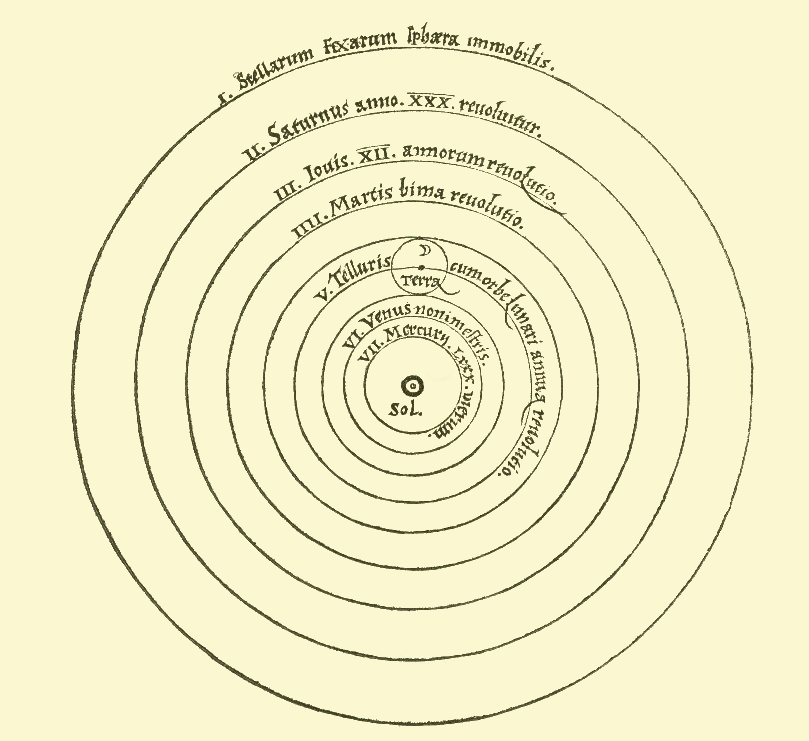
In 1543, shortly before his death, Copernicus published “De revolutionibus orbium coelestium” (On the Revolutions of the Celestial Spheres), a comprehensive work that fundamentally challenged the established geocentric view. In this treatise, he proposed that the Sun, rather than the Earth, occupied a stationary position near the center of the universe. The Earth, along with the other planets, moved in circular paths, or orbits, around the Sun. These paths were further refined by the concept of epicycles to account for observed planetary motions, a notion he inherited from earlier astronomical models.
The heliocentric theory asserted by Copernicus was not just a simple rearrangement of celestial bodies but a profound shift in perspective. By positing that Earth itself was in motion, Copernicus challenged the deeply ingrained view that humanity’s home was the center of all existence—a notion closely intertwined with philosophical and theological beliefs of the time.
While initially slow to gain acceptance due to its radical departure from conventional thinking and religious doctrines, the Copernican model eventually gained traction. It inspired subsequent astronomers, such as Galileo Galilei, Johannes Kepler, and Isaac Newton, who would further substantiate and expand upon his ideas with observational evidence and mathematical rigor.
Galileo’s telescopic observations, Kepler’s laws of planetary motion, and Newton’s law of universal gravitation collectively built upon Copernicus’s heliocentric model, leading to a comprehensive understanding of celestial mechanics. These developments not only cemented the heliocentric model as the foundation of modern astronomy but also heralded the scientific revolution—a period of profound advancement in scientific thought and methodology.
Copernicus’s heliocentrism marked a pivotal moment in the history of scientific discovery. It exemplified the shift from a faith-based interpretation of the cosmos to one grounded in observation, reason, and evidence. The courage of Nicolaus Copernicus to defy centuries of tradition and propose a model that placed the Earth among the planets orbiting the Sun ultimately transformed human understanding of our place in the universe. His legacy endures as a testament to the power of scientific inquiry and the enduring human quest for knowledge.
#Hindi
सदियों तक यह दृष्टिकोण बना रहा, जब तक पोलिश गणितज्ञ और खगोलशास्त्री निकोलस कोपरनिकस के काम के कारण एक क्रांतिकारी बदलाव नहीं आया। 19 फरवरी, 1473 को जन्मे कोपरनिकस विज्ञान के इतिहास में एक महत्वपूर्ण व्यक्ति बने, जिन्होंने सौरमंडल के सूर्यकेंद्रित मॉडल की नींव रखी।
1543 में, अपनी मृत्यु से ठीक पहले, कोपरनिकस ने “डी रेवोल्यूशनिबस ऑर्बियम कोलेस्टियम” (आकाशीय गोलों की क्रांतियों पर) प्रकाशित किया। यह एक व्यापक कार्य था जिसने स्थापित भूकेन्द्रित दृष्टिकोण को मूल रूप से चुनौती दी। इस ग्रंथ में उन्होंने प्रस्तावित किया कि पृथ्वी की बजाय सूर्य ब्रह्मांड के केंद्र के पास स्थिर स्थिति में है। पृथ्वी और अन्य ग्रह सूर्य के चारों ओर गोल पथों में घूमते हैं। इन पथों को ग्रहों की गति को समझाने के लिए पहले के खगोलीय मॉडलों से प्राप्त उपवर्तियों के विचार द्वारा और भी परिष्कृत किया गया।
कोपरनिकस द्वारा प्रस्तुत सूर्यकेंद्रित सिद्धांत केवल आकाशीय पिंडों का साधारण पुनर्व्यवस्था नहीं था, बल्कि यह दृष्टिकोण में एक गहरा बदलाव था। पृथ्वी को गतिमान मानकर, कोपरनिकस ने उस गहरी जमी हुई धारणा को चुनौती दी कि मानवता का घर अस्तित्व का केंद्र है—एक विचार जो उस समय के दार्शनिक और धार्मिक विश्वासों से गहराई से जुड़ा हुआ था।
यह मॉडल प्रारंभ में अपनी क्रांतिकारी सोच और धार्मिक सिद्धांतों से अलग होने के कारण धीमा था, लेकिन अंततः इसे स्वीकृति मिल गई। इसने गैलीलियो गैलीली, जोहान्स केपलर, और आइज़ैक न्यूटन जैसे खगोलशास्त्रियों को प्रेरित किया, जिन्होंने अवलोकन साक्ष्य और गणितीय कठोरता के साथ उनके विचारों को आगे बढ़ाया और मजबूत किया।
गैलीलियो के दूरबीन अवलोकन, केपलर के ग्रह गति के नियम, और न्यूटन का सार्वभौमिक गुरुत्वाकर्षण का नियम सामूहिक रूप से कोपरनिकस के सूर्यकेंद्रित मॉडल पर आधारित थे, जिससे आकाशीय यांत्रिकी की व्यापक समझ विकसित हुई। इन विकासों ने न केवल आधुनिक खगोलशास्त्र की नींव के रूप में सूर्यकेंद्रित मॉडल को मजबूत किया, बल्कि वैज्ञानिक क्रांति की शुरुआत भी की—वैज्ञानिक विचार और पद्धति में जबरदस्त प्रगति का एक काल।
कोपरनिकस का सूर्यकेंद्रवाद वैज्ञानिक खोज के इतिहास में एक महत्वपूर्ण क्षण था। इसने ब्रह्मांड की आस्था-आधारित व्याख्या से अवलोकन, तर्क और साक्ष्य पर आधारित दृष्टिकोण की ओर बदलाव को दर्शाया। सदियों पुरानी परंपरा को चुनौती देने और एक ऐसा मॉडल प्रस्तुत करने का साहस, जिसने पृथ्वी को सूर्य की परिक्रमा करने वाले ग्रहों में शामिल किया, ने हमारी ब्रह्मांड में स्थिति की समझ को बदल दिया। उनका योगदान वैज्ञानिक अन्वेषण की शक्ति और ज्ञान की निरंतर मानव खोज का प्रमाण है।


We all know that earth and other planets revolve around the sun.
The understanding of our solar system and the position of Earth within it has dramatically evolved over centuries. In ancient times, the predominant belief was that the Earth was the center of the universe, encapsulated within what is known as the geocentric model. This worldview was deeply rooted in philosophical, religious, and scientific thought, with figures like Ptolemy offering detailed models to support the idea that all celestial bodies, including the Sun, revolved around the stationary Earth.
This view persisted for centuries until a revolutionary shift occurred thanks to the work of the Polish mathematician and astronomer, Nicolaus Copernicus. Born on February 19, 1473, Copernicus would become a seminal figure in the history of science, laying the groundwork for what is now known as the heliocentric model of the solar system.
In 1543, shortly before his death, Copernicus published “De revolutionibus orbium coelestium” (On the Revolutions of the Celestial Spheres), a comprehensive work that fundamentally challenged the established geocentric view. In this treatise, he proposed that the Sun, rather than the Earth, occupied a stationary position near the center of the universe. The Earth, along with the other planets, moved in circular paths, or orbits, around the Sun. These paths were further refined by the concept of epicycles to account for observed planetary motions, a notion he inherited from earlier astronomical models.
The heliocentric theory asserted by Copernicus was not just a simple rearrangement of celestial bodies but a profound shift in perspective. By positing that Earth itself was in motion, Copernicus challenged the deeply ingrained view that humanity’s home was the center of all existence—a notion closely intertwined with philosophical and theological beliefs of the time.
While initially slow to gain acceptance due to its radical departure from conventional thinking and religious doctrines, the Copernican model eventually gained traction. It inspired subsequent astronomers, such as Galileo Galilei, Johannes Kepler, and Isaac Newton, who would further substantiate and expand upon his ideas with observational evidence and mathematical rigor.
Galileo’s telescopic observations, Kepler’s laws of planetary motion, and Newton’s law of universal gravitation collectively built upon Copernicus’s heliocentric model, leading to a comprehensive understanding of celestial mechanics. These developments not only cemented the heliocentric model as the foundation of modern astronomy but also heralded the scientific revolution—a period of profound advancement in scientific thought and methodology.
Copernicus’s heliocentrism marked a pivotal moment in the history of scientific discovery. It exemplified the shift from a faith-based interpretation of the cosmos to one grounded in observation, reason, and evidence. The courage of Nicolaus Copernicus to defy centuries of tradition and propose a model that placed the Earth among the planets orbiting the Sun ultimately transformed human understanding of our place in the universe. His legacy endures as a testament to the power of scientific inquiry and the enduring human quest for knowledge.
#Hindi
सदियों तक यह दृष्टिकोण बना रहा, जब तक पोलिश गणितज्ञ और खगोलशास्त्री निकोलस कोपरनिकस के काम के कारण एक क्रांतिकारी बदलाव नहीं आया। 19 फरवरी, 1473 को जन्मे कोपरनिकस विज्ञान के इतिहास में एक महत्वपूर्ण व्यक्ति बने, जिन्होंने सौरमंडल के सूर्यकेंद्रित मॉडल की नींव रखी।
1543 में, अपनी मृत्यु से ठीक पहले, कोपरनिकस ने “डी रेवोल्यूशनिबस ऑर्बियम कोलेस्टियम” (आकाशीय गोलों की क्रांतियों पर) प्रकाशित किया। यह एक व्यापक कार्य था जिसने स्थापित भूकेन्द्रित दृष्टिकोण को मूल रूप से चुनौती दी। इस ग्रंथ में उन्होंने प्रस्तावित किया कि पृथ्वी की बजाय सूर्य ब्रह्मांड के केंद्र के पास स्थिर स्थिति में है। पृथ्वी और अन्य ग्रह सूर्य के चारों ओर गोल पथों में घूमते हैं। इन पथों को ग्रहों की गति को समझाने के लिए पहले के खगोलीय मॉडलों से प्राप्त उपवर्तियों के विचार द्वारा और भी परिष्कृत किया गया।
कोपरनिकस द्वारा प्रस्तुत सूर्यकेंद्रित सिद्धांत केवल आकाशीय पिंडों का साधारण पुनर्व्यवस्था नहीं था, बल्कि यह दृष्टिकोण में एक गहरा बदलाव था। पृथ्वी को गतिमान मानकर, कोपरनिकस ने उस गहरी जमी हुई धारणा को चुनौती दी कि मानवता का घर अस्तित्व का केंद्र है—एक विचार जो उस समय के दार्शनिक और धार्मिक विश्वासों से गहराई से जुड़ा हुआ था।
यह मॉडल प्रारंभ में अपनी क्रांतिकारी सोच और धार्मिक सिद्धांतों से अलग होने के कारण धीमा था, लेकिन अंततः इसे स्वीकृति मिल गई। इसने गैलीलियो गैलीली, जोहान्स केपलर, और आइज़ैक न्यूटन जैसे खगोलशास्त्रियों को प्रेरित किया, जिन्होंने अवलोकन साक्ष्य और गणितीय कठोरता के साथ उनके विचारों को आगे बढ़ाया और मजबूत किया।
गैलीलियो के दूरबीन अवलोकन, केपलर के ग्रह गति के नियम, और न्यूटन का सार्वभौमिक गुरुत्वाकर्षण का नियम सामूहिक रूप से कोपरनिकस के सूर्यकेंद्रित मॉडल पर आधारित थे, जिससे आकाशीय यांत्रिकी की व्यापक समझ विकसित हुई। इन विकासों ने न केवल आधुनिक खगोलशास्त्र की नींव के रूप में सूर्यकेंद्रित मॉडल को मजबूत किया, बल्कि वैज्ञानिक क्रांति की शुरुआत भी की—वैज्ञानिक विचार और पद्धति में जबरदस्त प्रगति का एक काल।
कोपरनिकस का सूर्यकेंद्रवाद वैज्ञानिक खोज के इतिहास में एक महत्वपूर्ण क्षण था। इसने ब्रह्मांड की आस्था-आधारित व्याख्या से अवलोकन, तर्क और साक्ष्य पर आधारित दृष्टिकोण की ओर बदलाव को दर्शाया। सदियों पुरानी परंपरा को चुनौती देने और एक ऐसा मॉडल प्रस्तुत करने का साहस, जिसने पृथ्वी को सूर्य की परिक्रमा करने वाले ग्रहों में शामिल किया, ने हमारी ब्रह्मांड में स्थिति की समझ को बदल दिया। उनका योगदान वैज्ञानिक अन्वेषण की शक्ति और ज्ञान की निरंतर मानव खोज का प्रमाण है।
Share this: