
“The forecast said light rain… so why did my area flood?”
Almost everyone has faced this.
• The weather forecast looked normal
• TV said “light rain”
• And suddenly your street was flooded
People usually say:
“Weather forecasts are never correct.”
But the real issue is not that simple.
The weather may have changed only in your area, not everywhere.
And that difference is something old systems could not capture well.
This is where Automatic Weather Systems (AWS) become important.
Weather is no longer the same everywhere
Earlier, we thought:
• If it rains in the city, it rains everywhere
• If the district is hot, every place is hot
That is no longer true.
Today:
• One colony gets heavy rain
• Another nearby area stays dry
• One road floods, the next road doesn’t
Weather has become local and fast-changing.
To understand such weather, we need local measurement, not broad averages.
What is an Automatic Weather System (AWS)?
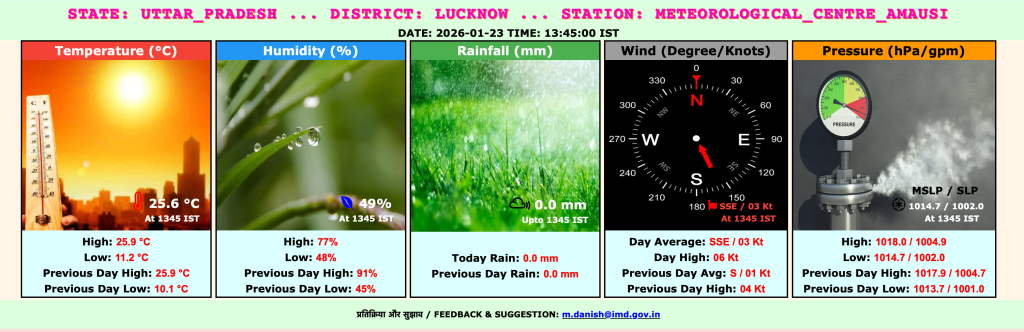
An Automatic Weather System (AWS) is a small weather station that works on its own.
It:
- Measures temperature, humidity, rainfall, wind, and air pressure
- Records data every few minutes
- Sends this data automatically to weather centres
There is no person sitting there to take readings.
In simple terms:
AWS tells us what the weather is like right now, at a specific place.
Why older ways of understanding weather are not enough anymore ?
Earlier weather stations:
• Took readings only a few times a day
• Were far apart
• Gave district or city-level averages
But weather does not follow boundaries like:
• Districts
• Cities
• States
Clouds don’t care about pin codes.
AWS helps by showing:
• How weather changes within short distances
• How fast conditions can shift within hours
This explains why forecasts sometimes feel “wrong”.
Why common people feel weather forecasts fail ?
The frustration is real.
But here is the truth:
• Forecasts depend on ground data
• AWS provides that ground data
• In areas with fewer or poorly working AWS stations, forecasts are weaker
So the problem is often lack of local data, not lack of science.
Knowing this helps people understand:
Forecasts are estimates, not guarantees.
How AWS makes climate change real for common people ?
Climate change often sounds distant:
• Global temperatures
• Long-term reports
• Future predictions
AWS brings it closer.
It shows:
• Nights becoming warmer in your city
• Rainfall happening in short, intense bursts
• Longer dry periods between rains
When people see changes in their own area, climate change stops being abstract.
It becomes part of daily life.
| Number | What It Refers To | What It Tells You |
| 1,000 | Automatic Weather Stations (AWS) across India, run mainly by India Meteorological Department (IMD), states & universities. | Weather is measured locally now, not just city-wide |
| 1,500–2,000 | Automatic Rain Gauges (ARG) nationwide | Rainfall is tracked minute-by-minute, especially intensity |
| 5–10 minutes | Typical time gap between AWS readings | Weather is monitored continuously, not occasionally |
| 2–4 times/day | How often many manual stations recorded data earlier | Shows why sudden events were missed before |
| 30–60 minutes | Time in which intense rain can cause urban flooding | Flood risk depends on intensity, not long duration |
| 30 min–3 hours | Short-term alert window improved by AI (nowcasting) | Critical for flash floods & sudden storms |
| Millions/day | Weather data points processed using AI | Human-only systems can’t handle this volume |
| 0 control | Ability of AWS/ARG/AI to stop weather | These systems warn — they don’t control rain or heat |
| Multiple zones | Micro-weather pockets inside one city | Explains uneven rain, heat, or flooding |
| More stations = fewer surprises | Direct relationship between station density & accuracy | Gaps still cause blind spots |
Why farmers already depend on AWS ?
For farmers, AWS is extremely important.
It helps with:
• When to water crops
• When to spray pesticides
• Preparing for heatwaves or heavy rain
• Weather-based crop insurance
But many farmers still don’t know:
• Where the nearest AWS is
• Whether it is working properly
• Whether advisories are based on local data
Understanding AWS helps farmers ask better questions and demand better services.
AWS and disasters: floods, storms, and extreme rain
Events like:
• Flash floods
• Sudden storms
• Cloudbursts
Develop very quickly.
AWS helps by:
• Measuring rain intensity in real time
• Supporting early warnings
• Helping disaster teams act faster
If AWS stations are missing or not maintained, warnings can be delayed.
For common people, this directly affects safety.
What AWS can and cannot do (important to know) ?
AWS can:
• Measure local weather accurately
• Improve short-term forecasts
• Help track long-term changes
AWS cannot:
• Predict weather perfectly every time
• Prevent disasters on its own
• Replace human judgement completely
Weather science works with probabilities, not certainty.
This honesty is important for trust.
The future: weather information will become more local
In the coming years:
• More AWS stations will be installed
• Weather alerts will become area-specific
• Short-term predictions (next 1–3 hours) will improve
Instead of:
“What is today’s weather in the city?”
People will ask:
“What will happen in my area in the next two hours?”
AWS is the base of this future.
Final takeaway: AWS matters to everyone
You don’t need to remember the technical name.
But you should remember this:
• Weather is changing fast
• It is different from place to place
• Local measurement is the key to understanding it
AWS helps society see weather closely, not from far away.
And in today’s uncertain climate,
better understanding means better decisions and sometimes safer lives.

 NehaScope
“The forecast said light rain… so why did my area flood?”
Almost everyone has faced this.
• The weather forecast looked normal
• TV said “light rain”
• And suddenly your street was flooded
People usually say:
“Weather forecasts are never correct.”
But the real issue is not that simple.
The weather may have changed only in your area, not everywhere.
And that difference is something old systems could not capture well.
This is where Automatic Weather Systems (AWS) become important.
Weather is no longer the same everywhere
Earlier, we thought:
• If it rains in the city, it rains everywhere
• If the district is hot, every place is hot
That is no longer true.
Today:
• One colony gets heavy rain
• Another nearby area stays dry
• One road floods, the next road doesn’t
Weather has become local and fast-changing.
To understand such weather, we need local measurement, not broad averages.
What is an Automatic Weather System (AWS)?
An Automatic Weather System (AWS) is a small weather station that works on its own.
It:
There is no person sitting there to take readings.
In simple terms:
AWS tells us what the weather is like right now, at a specific place.
Why older ways of understanding weather are not enough anymore ?
Earlier weather stations:
• Took readings only a few times a day
• Were far apart
• Gave district or city-level averages
But weather does not follow boundaries like:
• Districts
• Cities
• States
Clouds don’t care about pin codes.
AWS helps by showing:
• How weather changes within short distances
• How fast conditions can shift within hours
This explains why forecasts sometimes feel “wrong”.
Why common people feel weather forecasts fail ?
The frustration is real.
But here is the truth:
• Forecasts depend on ground data
• AWS provides that ground data
• In areas with fewer or poorly working AWS stations, forecasts are weaker
So the problem is often lack of local data, not lack of science.
Knowing this helps people understand:
Forecasts are estimates, not guarantees.
How AWS makes climate change real for common people ?
Climate change often sounds distant:
• Global temperatures
• Long-term reports
• Future predictions
AWS brings it closer.
It shows:
• Nights becoming warmer in your city
• Rainfall happening in short, intense bursts
• Longer dry periods between rains
When people see changes in their own area, climate change stops being abstract.
It becomes part of daily life.
Why farmers already depend on AWS ?
For farmers, AWS is extremely important.
It helps with:
• When to water crops
• When to spray pesticides
• Preparing for heatwaves or heavy rain
• Weather-based crop insurance
But many farmers still don’t know:
• Where the nearest AWS is
• Whether it is working properly
• Whether advisories are based on local data
Understanding AWS helps farmers ask better questions and demand better services.
AWS and disasters: floods, storms, and extreme rain
Events like:
• Flash floods
• Sudden storms
• Cloudbursts
Develop very quickly.
AWS helps by:
• Measuring rain intensity in real time
• Supporting early warnings
• Helping disaster teams act faster
If AWS stations are missing or not maintained, warnings can be delayed.
For common people, this directly affects safety.
What AWS can and cannot do (important to know) ?
AWS can:
• Measure local weather accurately
• Improve short-term forecasts
• Help track long-term changes
AWS cannot:
• Predict weather perfectly every time
• Prevent disasters on its own
• Replace human judgement completely
Weather science works with probabilities, not certainty.
This honesty is important for trust.
The future: weather information will become more local
In the coming years:
• More AWS stations will be installed
• Weather alerts will become area-specific
• Short-term predictions (next 1–3 hours) will improve
Instead of:
“What is today’s weather in the city?”
People will ask:
“What will happen in my area in the next two hours?”
AWS is the base of this future.
Final takeaway: AWS matters to everyone
You don’t need to remember the technical name.
But you should remember this:
• Weather is changing fast
• It is different from place to place
• Local measurement is the key to understanding it
AWS helps society see weather closely, not from far away.
And in today’s uncertain climate,
better understanding means better decisions and sometimes safer lives.
Share this: