A Red Moon Over India
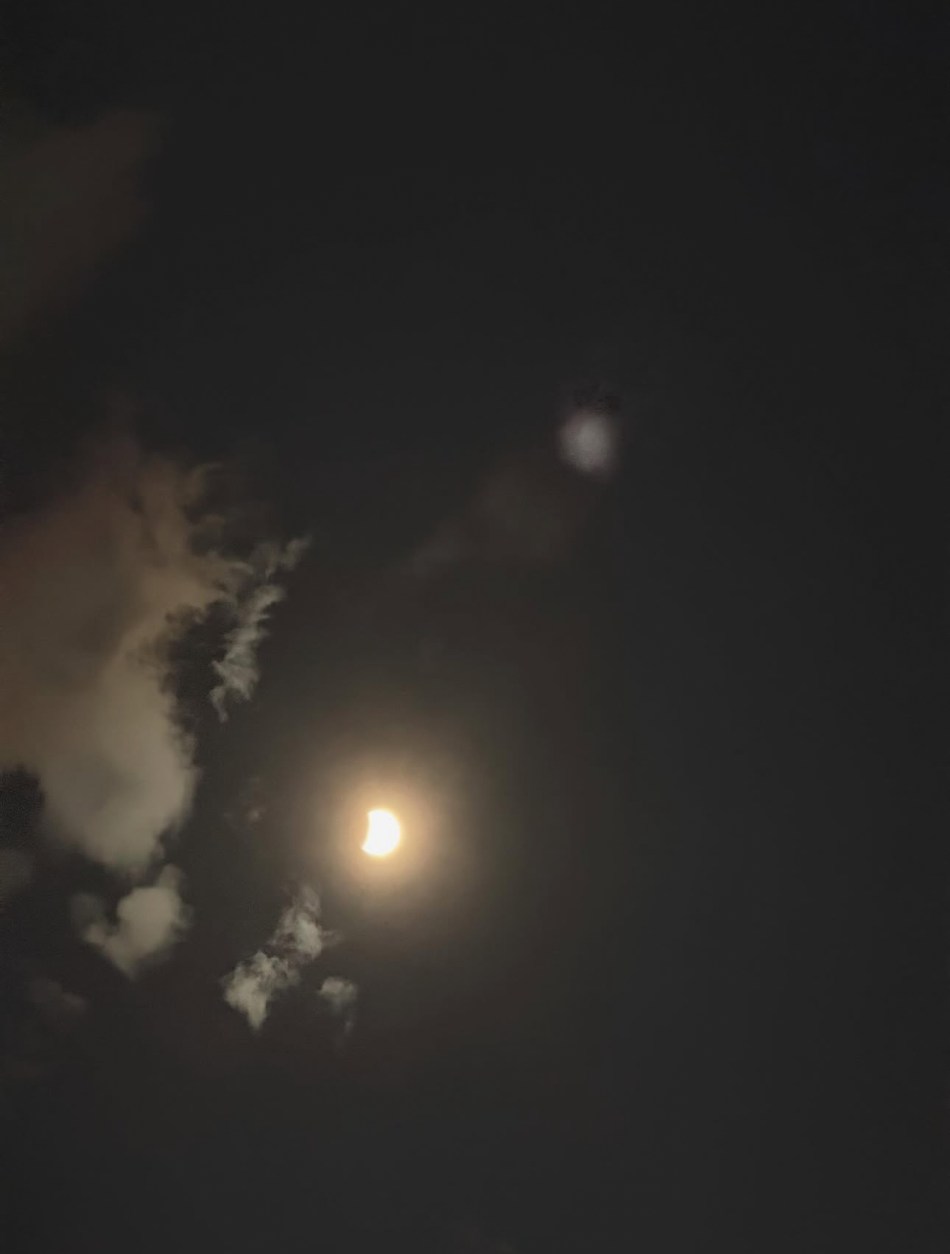
Last night, millions of people across India watched the Moon slowly disappear into Earth’s shadow. At first, a faint shading crept across the lunar surface. Then, as the eclipse deepened, the Moon turned a coppery red—what the media calls a Blood Moon. For many, it was a moment of awe; for others, a moment of unease, recalling age-old fears and rituals.
But behind this spectacle lies a deeper, rarely discussed story: during a lunar eclipse, the Moon does not simply darken—it becomes a giant reflector of Earth’s atmosphere. In those brief hours, the eclipse turns into a natural scientific experiment, a cosmic mirror showing us what our own planet looks like from afar.
In Indian Homes Last Night
While scientists prepared telescopes, Indian households prepared differently.
• Food was covered with lids.
• Pregnant women were advised to pause sewing.
• Children were warned: “Don’t step out during the eclipse.”
• WhatsApp forwards buzzed with claims: “The economy will change,” “Rahu–Ketu are powerful tonight,” “Pregnant women must beware.”
Fear became the language of family caution, showing how cultural memory still shapes our response to cosmic events.
How a Lunar Eclipse Works ?
A lunar eclipse occurs when the Earth comes between the Sun and the Moon. Our planet’s shadow has two parts:
• The penumbra: where Earth blocks only part of the Sun’s light, causing a dim shading.
• The umbra: the inner, darker shadow where the Sun is completely hidden.
As the Moon passes through these zones, we see the familiar phases of the eclipse. During totality, the Moon should, in theory, vanish. But it glows red instead. Why?
Because Earth’s atmosphere bends sunlight around its edges. The same way our skies look red during sunrise and sunset, that reddish light filters through the atmosphere, travels into space, hits the Moon’s surface, and bounces back to us. The Blood Moon is, quite literally, sunrise and sunset on Earth, projected onto the lunar surface.
The Moon as a Scientific Tool
During an eclipse, the Moon acts as a giant screen carrying Earth’s atmospheric “signature.” The sunlight reaching the Moon has passed through our atmosphere at a shallow angle, picking up chemical fingerprints along the way.
When scientists analyze this light using spectrometers, they can detect gases like:
• Ozone (O₃), which shields life from harmful ultraviolet rays.
• Oxygen (O₂), the gas that makes Earth habitable.
• Sodium (Na) and other trace elements that reveal upper-atmospheric layers.
This process—called transmission spectroscopy—is the same method astronomers use to study the atmospheres of exoplanets. In other words, a lunar eclipse gives us a rehearsal: it shows us what Earth would look like if a distant alien civilization were trying to detect life here.
India’s Sky, India’s Atmosphere
The light filtering through Earth’s atmosphere during the eclipse last night carried traces of what’s happening in our skies right now. Monsoon humidity, dust from dry regions, and urban pollution all leave subtle marks.
Scientists have even noted that volcanic eruptions or widespread forest fires can change the colour and intensity of a lunar eclipse. A hazier atmosphere can make the Moon darker; a cleaner atmosphere can make it brighter. Each eclipse, therefore, is a snapshot of Earth’s changing climate.
Imagine if amateur astronomers in Delhi, Bengaluru, and Ladakh compared their eclipse spectra. They would not just see the Moon—they’d see how local air quality and atmospheric conditions affect the Earth-to-Moon light journey. That’s the hidden power of this event.
From Myth to Method
Historically, eclipses were seen as omens. Ancient Babylonians inscribed eclipse predictions on clay tablets over 4,000 years ago, linking them to the fate of kings and empires. In India, the Rahu-Ketu myth explained eclipses as cosmic demons swallowing the Sun or Moon.
Last night too, in many Indian homes, food was covered, and pregnant women were asked to avoid work. These rituals are echoes of that ancient fear. But today, scientists see the eclipse as a method—a way to measure our own world using the most basic of tools: light and reflection.
The journey from myth to method is itself a story worth telling: what was once seen as a curse is now a cosmic laboratory.
Why Fear Lingers
- – For centuries, sudden darkness meant famine, plague, or war.
- – Science explains the shadow, but the shadow in the mind persists.
- – Psychology calls this cognitive dissonance—when the sky breaks routine, our brain feels unsettled.
- – The Indian common man today lives between scientific assurance and astrological warning.
What the Scientists Found ?
Research teams around the world have used lunar eclipses to study Earth’s atmosphere:
- In 2001, a team detected clear signals of ozone and oxygen using eclipse spectroscopy.
- In 2010, astronomers showed how eclipse spectra could simulate the study of Earth-like exoplanets, treating Earth as if it were a “distant world.”
- 2014 – Sodium & upper atmosphere: Researchers observed neutral sodium layers high above Earth, proving eclipses can probe even the rarefied upper reaches of the atmosphere.
- 2018 – Water vapor detection: By comparing spectra across umbra and penumbra, scientists picked up clear signs of water vapor absorption, showing how lower atmospheric layers imprint themselves on eclipse light.
- 2020 – Climate indicators: Teams noted that volcanic eruptions and large wildfires altered eclipse color curves, confirming that lunar eclipses can act as natural barometers of Earth’s climate health.
- Recent work has even measured the vertical layers of Earth’s atmosphere using the brightness of different parts of the eclipsed Moon.
- Ongoing – Exoplanet training ground: Astronomers now routinely use eclipse data as a template for how telescopes like JWST or future Earth-finders will study alien planets.
Why This Matters to us ?
You may wonder: “Nice science, but how does this affect me?” Here’s why it matters:
1. Health Awareness
Understanding that eclipses have no harmful effect on food, pregnancy, or eyesight liberates us from unnecessary fear. Science gives us peace of mind.
2. Climate Awareness
Each eclipse reflects the state of our skies. If volcanic ash, industrial pollution, or wildfire smoke changes the eclipse glow, it’s a reminder of how fragile our environment is.
3. Educational Opportunity
For children, an eclipse is a live science lesson. Instead of fear, they can learn how light, atmosphere, and planetary motion work in real time.
4. Citizen Science
With even modest equipment, amateur astronomers can join global efforts to collect eclipse data. In future, coordinated Indian observations could contribute to climate monitoring.
5. Cultural Reflection
Eclipses remind us of how myths and traditions travel across generations. Discussing them openly allows families to preserve stories while separating faith from fear.
6. Global Belonging
When you watch an eclipse in India, you are sharing the same cosmic event with people in Africa, Europe, and Australia. It creates a rare feeling of global connectedness—humanity under one sky.
7. Everyday Perspective Reset
Witnessing Earth’s shadow on the Moon can shift how we see daily problems. For a moment, traffic jams, bills, or deadlines shrink in scale compared to the grandeur of planetary motion.
Beyond the Red Glow: A Cosmic Connection
There’s also a poetic truth here. The Moon doesn’t just show us Earth’s atmosphere—it reflects humanity’s journey. For thousands of years, this same red glow struck terror in villages and palaces. It was read as a warning, an omen, a celestial punishment. Kings in Babylon feared assassination; Indian families hurried to complete rituals before the shadow fell. Fear was survival.
And yet, today, that same phenomenon fuels one of the most advanced branches of astronomy: the hunt for life on other planets. The red Moon is no longer a prophecy of doom but a natural spectrometer, allowing us to test how oxygen, water, and ozone can be read from light. The shift—from trembling under the shadow to using it as an experiment—shows how far human curiosity has carried us.
But curiosity hasn’t erased community. Even now, the eclipse unites people. Families gather to chant, grandparents tell children not to eat, children sneak peeks through curtains. In another corner, amateur astronomers align their telescopes; photographers wait for the perfect crimson glow. WhatsApp forwards buzz, Instagram fills with time-lapse reels. Fear and wonder, tradition and technology, coexist on the same night.
This is the magic of an eclipse: it is at once personal and universal, tribal and scientific, ancient and futuristic. The science doesn’t erase the story—it enriches it, reminding us that we don’t just observe the sky, we interpret it, together.
Fear as Ritual, Ritual as Community
Even if science clears the myths, fear still has a role. It gathers people together—chanting mantras, sharing stories, scolding children, looking up at the same sky.
Perhaps the real meaning of these fears is not danger, but belonging.
The Moon as a Mirror
The lunar eclipse is over now. But its message lingers. When you looked at the coppery Moon last night, you were not just seeing Earth’s shadow on a rocky sphere 384,000 kilometres away. You were seeing a reflection of everything that makes us human: our atmosphere, our culture, our fears, our rituals, and our relentless drive to measure and understand.
A lunar eclipse is both an ancient ritual and a modern spectrometer. It is proof that one event can carry many layers: a myth for believers, a memory for families, a measurement for scientists, and a miracle for poets. Few natural events hold this kind of multidisciplinary power.
So the next time the Moon turns red, don’t just ask: “Why does it happen?” Ask instead:
• “What does it reveal about the air we breathe?”
• “What does it show about the stories we inherit?”
• “What does it teach us about how knowledge evolves?”
Because ultimately, the Moon doesn’t just mirror Earth’s shadow. It mirrors who we are—our fears, our faiths, and our future. And perhaps that is the greatest lesson of all: that in chasing the shadow on the Moon, we discover the light within ourselves.
Image credit : AstroNomadLife & Nehru Planetarium, New Delhi

 NehaScope
A Red Moon Over India
Last night, millions of people across India watched the Moon slowly disappear into Earth’s shadow. At first, a faint shading crept across the lunar surface. Then, as the eclipse deepened, the Moon turned a coppery red—what the media calls a Blood Moon. For many, it was a moment of awe; for others, a moment of unease, recalling age-old fears and rituals.
But behind this spectacle lies a deeper, rarely discussed story: during a lunar eclipse, the Moon does not simply darken—it becomes a giant reflector of Earth’s atmosphere. In those brief hours, the eclipse turns into a natural scientific experiment, a cosmic mirror showing us what our own planet looks like from afar.
How a Lunar Eclipse Works ?
A lunar eclipse occurs when the Earth comes between the Sun and the Moon. Our planet’s shadow has two parts:
• The penumbra: where Earth blocks only part of the Sun’s light, causing a dim shading.
• The umbra: the inner, darker shadow where the Sun is completely hidden.
As the Moon passes through these zones, we see the familiar phases of the eclipse. During totality, the Moon should, in theory, vanish. But it glows red instead. Why?
Because Earth’s atmosphere bends sunlight around its edges. The same way our skies look red during sunrise and sunset, that reddish light filters through the atmosphere, travels into space, hits the Moon’s surface, and bounces back to us. The Blood Moon is, quite literally, sunrise and sunset on Earth, projected onto the lunar surface.
The Moon as a Scientific Tool
During an eclipse, the Moon acts as a giant screen carrying Earth’s atmospheric “signature.” The sunlight reaching the Moon has passed through our atmosphere at a shallow angle, picking up chemical fingerprints along the way.
When scientists analyze this light using spectrometers, they can detect gases like:
• Ozone (O₃), which shields life from harmful ultraviolet rays.
• Oxygen (O₂), the gas that makes Earth habitable.
• Sodium (Na) and other trace elements that reveal upper-atmospheric layers.
This process—called transmission spectroscopy—is the same method astronomers use to study the atmospheres of exoplanets. In other words, a lunar eclipse gives us a rehearsal: it shows us what Earth would look like if a distant alien civilization were trying to detect life here.
India’s Sky, India’s Atmosphere
The light filtering through Earth’s atmosphere during the eclipse last night carried traces of what’s happening in our skies right now. Monsoon humidity, dust from dry regions, and urban pollution all leave subtle marks.
Scientists have even noted that volcanic eruptions or widespread forest fires can change the colour and intensity of a lunar eclipse. A hazier atmosphere can make the Moon darker; a cleaner atmosphere can make it brighter. Each eclipse, therefore, is a snapshot of Earth’s changing climate.
Imagine if amateur astronomers in Delhi, Bengaluru, and Ladakh compared their eclipse spectra. They would not just see the Moon—they’d see how local air quality and atmospheric conditions affect the Earth-to-Moon light journey. That’s the hidden power of this event.
From Myth to Method
Historically, eclipses were seen as omens. Ancient Babylonians inscribed eclipse predictions on clay tablets over 4,000 years ago, linking them to the fate of kings and empires. In India, the Rahu-Ketu myth explained eclipses as cosmic demons swallowing the Sun or Moon.
Last night too, in many Indian homes, food was covered, and pregnant women were asked to avoid work. These rituals are echoes of that ancient fear. But today, scientists see the eclipse as a method—a way to measure our own world using the most basic of tools: light and reflection.
The journey from myth to method is itself a story worth telling: what was once seen as a curse is now a cosmic laboratory.
What the Scientists Found ?
Research teams around the world have used lunar eclipses to study Earth’s atmosphere:
Why This Matters to us ?
You may wonder: “Nice science, but how does this affect me?” Here’s why it matters:
1. Health Awareness
Understanding that eclipses have no harmful effect on food, pregnancy, or eyesight liberates us from unnecessary fear. Science gives us peace of mind.
2. Climate Awareness
Each eclipse reflects the state of our skies. If volcanic ash, industrial pollution, or wildfire smoke changes the eclipse glow, it’s a reminder of how fragile our environment is.
3. Educational Opportunity
For children, an eclipse is a live science lesson. Instead of fear, they can learn how light, atmosphere, and planetary motion work in real time.
4. Citizen Science
With even modest equipment, amateur astronomers can join global efforts to collect eclipse data. In future, coordinated Indian observations could contribute to climate monitoring.
5. Cultural Reflection
Eclipses remind us of how myths and traditions travel across generations. Discussing them openly allows families to preserve stories while separating faith from fear.
6. Global Belonging
When you watch an eclipse in India, you are sharing the same cosmic event with people in Africa, Europe, and Australia. It creates a rare feeling of global connectedness—humanity under one sky.
7. Everyday Perspective Reset
Witnessing Earth’s shadow on the Moon can shift how we see daily problems. For a moment, traffic jams, bills, or deadlines shrink in scale compared to the grandeur of planetary motion.
Beyond the Red Glow: A Cosmic Connection
There’s also a poetic truth here. The Moon doesn’t just show us Earth’s atmosphere—it reflects humanity’s journey. For thousands of years, this same red glow struck terror in villages and palaces. It was read as a warning, an omen, a celestial punishment. Kings in Babylon feared assassination; Indian families hurried to complete rituals before the shadow fell. Fear was survival.
And yet, today, that same phenomenon fuels one of the most advanced branches of astronomy: the hunt for life on other planets. The red Moon is no longer a prophecy of doom but a natural spectrometer, allowing us to test how oxygen, water, and ozone can be read from light. The shift—from trembling under the shadow to using it as an experiment—shows how far human curiosity has carried us.
But curiosity hasn’t erased community. Even now, the eclipse unites people. Families gather to chant, grandparents tell children not to eat, children sneak peeks through curtains. In another corner, amateur astronomers align their telescopes; photographers wait for the perfect crimson glow. WhatsApp forwards buzz, Instagram fills with time-lapse reels. Fear and wonder, tradition and technology, coexist on the same night.
This is the magic of an eclipse: it is at once personal and universal, tribal and scientific, ancient and futuristic. The science doesn’t erase the story—it enriches it, reminding us that we don’t just observe the sky, we interpret it, together.
The Moon as a Mirror
The lunar eclipse is over now. But its message lingers. When you looked at the coppery Moon last night, you were not just seeing Earth’s shadow on a rocky sphere 384,000 kilometres away. You were seeing a reflection of everything that makes us human: our atmosphere, our culture, our fears, our rituals, and our relentless drive to measure and understand.
A lunar eclipse is both an ancient ritual and a modern spectrometer. It is proof that one event can carry many layers: a myth for believers, a memory for families, a measurement for scientists, and a miracle for poets. Few natural events hold this kind of multidisciplinary power.
So the next time the Moon turns red, don’t just ask: “Why does it happen?” Ask instead:
• “What does it reveal about the air we breathe?”
• “What does it show about the stories we inherit?”
• “What does it teach us about how knowledge evolves?”
Because ultimately, the Moon doesn’t just mirror Earth’s shadow. It mirrors who we are—our fears, our faiths, and our future. And perhaps that is the greatest lesson of all: that in chasing the shadow on the Moon, we discover the light within ourselves.
Image credit : AstroNomadLife & Nehru Planetarium, New Delhi
Share this: