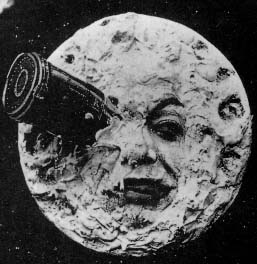
The landing on the eye of the Moon, the movie’s most iconic scene
The year was 1902, a time of great technological advancements and scientific breakthroughs. The world was abuzz with excitement as Georges Méliès’ groundbreaking film, “A Trip to the Moon,” was released in theaters today. This science fiction masterpiece takes its audience on an extraordinary journey to the moon, a place that until now has only been a subject of speculation and dreams.
As moviegoers gathered in darkened theaters, they were transported to a world beyond their wildest imagination. Méliès, a pioneer of special effects and storytelling, combined his unique artistic vision with the latest technological innovations, creating a cinematic experience unlike anything seen before.
Méliès (at left) in the studio where A Trip to the Moon was filmed
At a time when space exploration was still a distant dream, “A Trip to the Moon” captured the collective fascination with the unknown universe. Audiences were captivated by the depiction of a group of scientists embarking on a daring adventure to visit Earth’s celestial neighbor. The film showcased the potential of film as a medium to both entertain and educate, allowing viewers to envision what the future of space travel might hold.
Georges Méliès
Méliès’ visionary approach to filmmaking was not limited to creating awe-inspiring imagery; he also incorporated elements of fantasy and imagination into his work. The moon depicted in “A Trip to the Moon” is a whimsical and magical place, inhabited by strange creatures and governed by its own peculiar laws of physics. This fantastical representation of the lunar landscape mesmerized audiences, who were transported to a world where anything was possible.
The film’s success marked a turning point in the history of cinema. Méliès’ innovative use of special effects, such as stop-motion animation and superimposition, set a new standard for visual storytelling. “A Trip to the Moon” became a touchstone for future filmmakers, inspiring generations of directors to explore the realms of science fiction and fantasy.
Beyond its artistic and technical achievements, “A Trip to the Moon” reflected the zeitgeist of its time. The early 20th century was marked by a wave of scientific progress, with discoveries and inventions shaping the world at an unprecedented rate. The film tapped into society’s fascination with the possibilities of scientific advancements, fueling the collective imagination and igniting a desire for exploration.
While space travel remained a distant prospect in 1902, the release of “A Trip to the Moon” brought humanity one step closer to realizing this dream. The film served as a catalyst for scientific and technological advancements, inspiring future generations to push the boundaries of human knowledge and explore the depths of the cosmos. It sparked a sense of wonder and curiosity that would continue to drive scientific progress for years to come.
As the years passed, the world witnessed remarkable achievements in space exploration. From the first manned mission to the moon in 1969 to the countless satellites and probes that have ventured into the farthest reaches of our solar system, humanity’s quest to unravel the mysteries of the universe has become a reality.
Méliès’ “A Trip to the Moon” laid the foundation for this remarkable journey. The film not only captured the imagination of its audience but also instilled a sense of possibility and potential. It showed people that the seemingly impossible could become possible with determination, innovation, and a relentless pursuit of knowledge.
In the decades that followed the release of the film, scientists and engineers around the world were inspired to turn science fiction into science fact. They developed revolutionary technologies, such as rocket propulsion systems and spacecraft capable of withstanding the harsh conditions of space. They conducted extensive research and experimentation, ultimately paving the way for humanity to venture beyond the confines of Earth’s atmosphere.
The impact of “A Trip to the Moon” extended far beyond the realm of cinema. It became a symbol of the human spirit, a testament to our innate desire to explore and discover. It ignited a passion for scientific exploration and inspired countless individuals to pursue careers in space science and engineering.
Today, as we gaze upon images of distant galaxies captured by powerful telescopes and witness the launch of spacecraft bound for distant planets, we owe a debt of gratitude to the visionaries like Georges Méliès. Their imagination and creativity paved the way for the incredible advancements we enjoy today.
As we look towards the future, it is crucial to remember the role that art and storytelling play in shaping our scientific endeavors. Films like “A Trip to the Moon” remind us of the power of the human imagination and the importance of nurturing our sense of wonder. They continue to inspire new generations of scientists, engineers, and filmmakers to push the boundaries of what is possible and strive to unlock the secrets of the cosmos.
So, let us celebrate the legacy of “A Trip to the Moon” and the countless other works of art that continue to captivate and inspire us. Let us continue to push the boundaries of human knowledge, guided by a spirit of curiosity, wonder, and imagination. And let us never forget that the stars, once distant and unreachable, are now within our grasp, thanks to the tireless dedication and boundless creativity of visionaries like Georges Méliès.
#Hindi
साल 1902 की बात है, जब तकनीकी और वैज्ञानिक खोजों में बड़ी तरक्की हो रही थी। दुनिया में बहुत उत्साह था क्योंकि जॉर्ज मेलिएस की शानदार फिल्म “ए ट्रिप टू द मून” सिनेमाघरों में आई थी। ये विज्ञान-फंतासी फिल्म दर्शकों को चाँद की अद्भुत यात्रा पर ले जाती है, जो अब तक केवल कल्पना और सपनों का हिस्सा रहा था।
जब लोग सिनेमाघरों में इकट्ठा हुए, तो वे अपनी कल्पना से भी परे एक दुनिया में पहुँच गए। मेलिएस ने अपनी अनूठी कलात्मक दृष्टि और नवीनतम तकनीकी नवाचारों का उपयोग करके एक अद्वितीय सिनेमाई अनुभव तैयार किया, जैसा पहले कभी नहीं देखा गया था।
एक समय जब अंतरिक्ष यात्रा केवल एक सपना था, “ए ट्रिप टू द मून” ने अज्ञात ब्रह्मांड के प्रति लोगों की रुचि को जगाया। फिल्म ने दर्शकों को दिखाया कि वैज्ञानिकों का एक समूह चाँद पर पहुँचने के लिए एक साहसिक यात्रा पर निकलता है। यह फिल्म दिखाती है कि फिल्म माध्यम का उपयोग मनोरंजन और शिक्षा दोनों के लिए किया जा सकता है, जिससे दर्शक भविष्य में अंतरिक्ष यात्रा की संभावनाओं की कल्पना कर सकें।
मेलिएस की दृष्टिकोण केवल अविश्वसनीय चित्रण तक सीमित नहीं थी; उन्होंने अपनी रचनाओं में कल्पना और फंतासी के तत्व भी शामिल किए। “ए ट्रिप टू द मून” में चाँद को एक जादुई और विचित्र जगह के रूप में दिखाया गया है, जहाँ अजीब जीव रहते हैं और भौतिकी के अपने ही विचित्र नियम होते हैं। इस कल्पनात्मक चंद्रमा की छवि ने दर्शकों को मंत्रमुग्ध कर दिया, जो एक ऐसी दुनिया में पहुँच गए जहाँ सब कुछ संभव था।
फिल्म की सफलता ने सिनेमा के इतिहास में एक महत्वपूर्ण मोड़ बना दिया। मेलिएस के विशेष प्रभावों के उपयोग, जैसे स्टॉप-मोशन एनीमेशन और सुपरइंपोज़िशन, ने दृश्य कथा के लिए एक नया मानदंड स्थापित किया। “ए ट्रिप टू द मून” भविष्य के फिल्म निर्माताओं के लिए एक प्रेरणा बना, जिससे विज्ञान-कथा और फंतासी की दुनिया की खोज शुरू हुई।
इसके अलावा, “ए ट्रिप टू द मून” ने अपने समय के विचारों को प्रतिबिंबित किया। 20वीं सदी की शुरुआत एक वैज्ञानिक प्रगति की लहर से चिह्नित थी, जिसमें खोजों और आविष्कारों ने दुनिया को अभूतपूर्व गति से आकार दिया। फिल्म ने वैज्ञानिक उन्नति की संभावनाओं के प्रति समाज की रुचि को उजागर किया, जिससे सामूहिक कल्पना को प्रेरणा मिली और अन्वेषण की इच्छा जाग उठी।
1902 में जब अंतरिक्ष यात्रा एक दूर का सपना था, “ए ट्रिप टू द मून” की रिलीज ने मानवता को इस सपने के करीब ला दिया। फिल्म ने वैज्ञानिक और तकनीकी प्रगति के लिए एक उत्प्रेरक के रूप में काम किया, आने वाली पीढ़ियों को मानव ज्ञान की सीमाओं को पार करने और ब्रह्मांड की गहराइयों का अन्वेषण करने के लिए प्रेरित किया। इसने एक ऐसे आश्चर्य और जिज्ञासा की भावना को जन्म दिया जिसने आने वाले वर्षों तक वैज्ञानिक प्रगति को प्रेरित किया।
जैसे-जैसे साल बीते, दुनिया ने अंतरिक्ष अन्वेषण में उल्लेखनीय उपलब्धियाँ देखीं। 1969 में चाँद पर पहली मानव मिशन से लेकर हमारे सौरमंडल के सुदूर हिस्सों में जाने वाले उपग्रहों और जांचों तक, ब्रह्मांड के रहस्यों को उजागर करने की मानवता की खोज अब एक वास्तविकता बन चुकी है।
मेलिएस की “ए ट्रिप टू द मून” ने इस अद्भुत यात्रा की नींव रखी। फिल्म ने न केवल अपने दर्शकों की कल्पना को मोहित किया बल्कि संभावना और क्षमता की भावना को भी जगाया। इसने लोगों को दिखाया कि दृढ़ संकल्प, नवाचार और ज्ञान की अथाह खोज से असंभव से संभव तक यात्रा की जा सकती है।
फिल्म की रिलीज के बाद के दशकों में, दुनिया भर के वैज्ञानिक और इंजीनियर विज्ञान-कथा को विज्ञान तथ्य में बदलने के लिए प्रेरित हुए। उन्होंने रॉकेट प्रणोदन प्रणाली और अंतरिक्ष यान जैसी क्रांतिकारी तकनीकों को विकसित किया, जो अंतरिक्ष की कठोर परिस्थितियों का सामना कर सकती हैं। उन्होंने व्यापक रिसर्च और परीक्षण किए, अंतत: मानवता को पृथ्वी के वायुमंडल के बाहर की ओर यात्रा करने का मार्ग प्रशस्त किया।
“ए ट्रिप टू द मून” का प्रभाव सिनेमा के दायरे से कहीं आगे बढ़ गया। यह मानव आत्मा का प्रतीक बन गया, हमारी खोज और खोज की स्वाभाविक इच्छा का प्रमाण। इसने वैज्ञानिक खोज के प्रति एक जुनून को प्रज्वलित किया और अनेकों व्यक्तियों को अंतरिक्ष विज्ञान और इंजीनियरिंग में करियर बनाने के लिए प्रेरित किया।
आज, जब हम सुदूर आकाशगंगाओं की तस्वीरें देखते हैं जिन्हें शक्तिशाली दूरबीनों ने कैप्चर किया है और उन अंतरिक्ष यानों के प्रक्षेपण को देखते हैं जो दूर के ग्रहों की ओर बढ़ रहे हैं, तो हमें जॉर्ज मेलिएस जैसे दूरदर्शियों का आभार मानना चाहिए। उनकी कल्पना और रचनात्मकता ने आज जो अद्भुत प्रगति हम देख रहे हैं, उसका मार्ग प्रशस्त किया।
जैसे ही हम भविष्य की ओर देखते हैं, यह याद रखना महत्वपूर्ण है कि कला और कहानी कहने की हमारे वैज्ञानिक प्रयासों को आकार देने में क्या भूमिका है। “ए ट्रिप टू द मून” जैसी फिल्में हमें मानव कल्पना की शक्ति और आश्चर्य की हमारी भावना को पोषित करने के महत्व की याद दिलाती हैं। वे नई पीढ़ियों के वैज्ञानिकों, इंजीनियरों और फिल्म निर्माताओं को प्रेरित करती रहती हैं कि वे संभव की सीमाओं को चुनौती दें और ब्रह्मांड के रहस्यों को खोलने का प्रयास करें।

 NehaScope
The year was 1902, a time of great technological advancements and scientific breakthroughs. The world was abuzz with excitement as Georges Méliès’ groundbreaking film, “A Trip to the Moon,” was released in theaters today. This science fiction masterpiece takes its audience on an extraordinary journey to the moon, a place that until now has only been a subject of speculation and dreams.
As moviegoers gathered in darkened theaters, they were transported to a world beyond their wildest imagination. Méliès, a pioneer of special effects and storytelling, combined his unique artistic vision with the latest technological innovations, creating a cinematic experience unlike anything seen before.
At a time when space exploration was still a distant dream, “A Trip to the Moon” captured the collective fascination with the unknown universe. Audiences were captivated by the depiction of a group of scientists embarking on a daring adventure to visit Earth’s celestial neighbor. The film showcased the potential of film as a medium to both entertain and educate, allowing viewers to envision what the future of space travel might hold.
Méliès’ visionary approach to filmmaking was not limited to creating awe-inspiring imagery; he also incorporated elements of fantasy and imagination into his work. The moon depicted in “A Trip to the Moon” is a whimsical and magical place, inhabited by strange creatures and governed by its own peculiar laws of physics. This fantastical representation of the lunar landscape mesmerized audiences, who were transported to a world where anything was possible.
The film’s success marked a turning point in the history of cinema. Méliès’ innovative use of special effects, such as stop-motion animation and superimposition, set a new standard for visual storytelling. “A Trip to the Moon” became a touchstone for future filmmakers, inspiring generations of directors to explore the realms of science fiction and fantasy.
Beyond its artistic and technical achievements, “A Trip to the Moon” reflected the zeitgeist of its time. The early 20th century was marked by a wave of scientific progress, with discoveries and inventions shaping the world at an unprecedented rate. The film tapped into society’s fascination with the possibilities of scientific advancements, fueling the collective imagination and igniting a desire for exploration.
While space travel remained a distant prospect in 1902, the release of “A Trip to the Moon” brought humanity one step closer to realizing this dream. The film served as a catalyst for scientific and technological advancements, inspiring future generations to push the boundaries of human knowledge and explore the depths of the cosmos. It sparked a sense of wonder and curiosity that would continue to drive scientific progress for years to come.
As the years passed, the world witnessed remarkable achievements in space exploration. From the first manned mission to the moon in 1969 to the countless satellites and probes that have ventured into the farthest reaches of our solar system, humanity’s quest to unravel the mysteries of the universe has become a reality.
Méliès’ “A Trip to the Moon” laid the foundation for this remarkable journey. The film not only captured the imagination of its audience but also instilled a sense of possibility and potential. It showed people that the seemingly impossible could become possible with determination, innovation, and a relentless pursuit of knowledge.
In the decades that followed the release of the film, scientists and engineers around the world were inspired to turn science fiction into science fact. They developed revolutionary technologies, such as rocket propulsion systems and spacecraft capable of withstanding the harsh conditions of space. They conducted extensive research and experimentation, ultimately paving the way for humanity to venture beyond the confines of Earth’s atmosphere.
The impact of “A Trip to the Moon” extended far beyond the realm of cinema. It became a symbol of the human spirit, a testament to our innate desire to explore and discover. It ignited a passion for scientific exploration and inspired countless individuals to pursue careers in space science and engineering.
Today, as we gaze upon images of distant galaxies captured by powerful telescopes and witness the launch of spacecraft bound for distant planets, we owe a debt of gratitude to the visionaries like Georges Méliès. Their imagination and creativity paved the way for the incredible advancements we enjoy today.
As we look towards the future, it is crucial to remember the role that art and storytelling play in shaping our scientific endeavors. Films like “A Trip to the Moon” remind us of the power of the human imagination and the importance of nurturing our sense of wonder. They continue to inspire new generations of scientists, engineers, and filmmakers to push the boundaries of what is possible and strive to unlock the secrets of the cosmos.
So, let us celebrate the legacy of “A Trip to the Moon” and the countless other works of art that continue to captivate and inspire us. Let us continue to push the boundaries of human knowledge, guided by a spirit of curiosity, wonder, and imagination. And let us never forget that the stars, once distant and unreachable, are now within our grasp, thanks to the tireless dedication and boundless creativity of visionaries like Georges Méliès.
#Hindi
साल 1902 की बात है, जब तकनीकी और वैज्ञानिक खोजों में बड़ी तरक्की हो रही थी। दुनिया में बहुत उत्साह था क्योंकि जॉर्ज मेलिएस की शानदार फिल्म “ए ट्रिप टू द मून” सिनेमाघरों में आई थी। ये विज्ञान-फंतासी फिल्म दर्शकों को चाँद की अद्भुत यात्रा पर ले जाती है, जो अब तक केवल कल्पना और सपनों का हिस्सा रहा था।
जब लोग सिनेमाघरों में इकट्ठा हुए, तो वे अपनी कल्पना से भी परे एक दुनिया में पहुँच गए। मेलिएस ने अपनी अनूठी कलात्मक दृष्टि और नवीनतम तकनीकी नवाचारों का उपयोग करके एक अद्वितीय सिनेमाई अनुभव तैयार किया, जैसा पहले कभी नहीं देखा गया था।
एक समय जब अंतरिक्ष यात्रा केवल एक सपना था, “ए ट्रिप टू द मून” ने अज्ञात ब्रह्मांड के प्रति लोगों की रुचि को जगाया। फिल्म ने दर्शकों को दिखाया कि वैज्ञानिकों का एक समूह चाँद पर पहुँचने के लिए एक साहसिक यात्रा पर निकलता है। यह फिल्म दिखाती है कि फिल्म माध्यम का उपयोग मनोरंजन और शिक्षा दोनों के लिए किया जा सकता है, जिससे दर्शक भविष्य में अंतरिक्ष यात्रा की संभावनाओं की कल्पना कर सकें।
मेलिएस की दृष्टिकोण केवल अविश्वसनीय चित्रण तक सीमित नहीं थी; उन्होंने अपनी रचनाओं में कल्पना और फंतासी के तत्व भी शामिल किए। “ए ट्रिप टू द मून” में चाँद को एक जादुई और विचित्र जगह के रूप में दिखाया गया है, जहाँ अजीब जीव रहते हैं और भौतिकी के अपने ही विचित्र नियम होते हैं। इस कल्पनात्मक चंद्रमा की छवि ने दर्शकों को मंत्रमुग्ध कर दिया, जो एक ऐसी दुनिया में पहुँच गए जहाँ सब कुछ संभव था।
फिल्म की सफलता ने सिनेमा के इतिहास में एक महत्वपूर्ण मोड़ बना दिया। मेलिएस के विशेष प्रभावों के उपयोग, जैसे स्टॉप-मोशन एनीमेशन और सुपरइंपोज़िशन, ने दृश्य कथा के लिए एक नया मानदंड स्थापित किया। “ए ट्रिप टू द मून” भविष्य के फिल्म निर्माताओं के लिए एक प्रेरणा बना, जिससे विज्ञान-कथा और फंतासी की दुनिया की खोज शुरू हुई।
इसके अलावा, “ए ट्रिप टू द मून” ने अपने समय के विचारों को प्रतिबिंबित किया। 20वीं सदी की शुरुआत एक वैज्ञानिक प्रगति की लहर से चिह्नित थी, जिसमें खोजों और आविष्कारों ने दुनिया को अभूतपूर्व गति से आकार दिया। फिल्म ने वैज्ञानिक उन्नति की संभावनाओं के प्रति समाज की रुचि को उजागर किया, जिससे सामूहिक कल्पना को प्रेरणा मिली और अन्वेषण की इच्छा जाग उठी।
1902 में जब अंतरिक्ष यात्रा एक दूर का सपना था, “ए ट्रिप टू द मून” की रिलीज ने मानवता को इस सपने के करीब ला दिया। फिल्म ने वैज्ञानिक और तकनीकी प्रगति के लिए एक उत्प्रेरक के रूप में काम किया, आने वाली पीढ़ियों को मानव ज्ञान की सीमाओं को पार करने और ब्रह्मांड की गहराइयों का अन्वेषण करने के लिए प्रेरित किया। इसने एक ऐसे आश्चर्य और जिज्ञासा की भावना को जन्म दिया जिसने आने वाले वर्षों तक वैज्ञानिक प्रगति को प्रेरित किया।
जैसे-जैसे साल बीते, दुनिया ने अंतरिक्ष अन्वेषण में उल्लेखनीय उपलब्धियाँ देखीं। 1969 में चाँद पर पहली मानव मिशन से लेकर हमारे सौरमंडल के सुदूर हिस्सों में जाने वाले उपग्रहों और जांचों तक, ब्रह्मांड के रहस्यों को उजागर करने की मानवता की खोज अब एक वास्तविकता बन चुकी है।
मेलिएस की “ए ट्रिप टू द मून” ने इस अद्भुत यात्रा की नींव रखी। फिल्म ने न केवल अपने दर्शकों की कल्पना को मोहित किया बल्कि संभावना और क्षमता की भावना को भी जगाया। इसने लोगों को दिखाया कि दृढ़ संकल्प, नवाचार और ज्ञान की अथाह खोज से असंभव से संभव तक यात्रा की जा सकती है।
फिल्म की रिलीज के बाद के दशकों में, दुनिया भर के वैज्ञानिक और इंजीनियर विज्ञान-कथा को विज्ञान तथ्य में बदलने के लिए प्रेरित हुए। उन्होंने रॉकेट प्रणोदन प्रणाली और अंतरिक्ष यान जैसी क्रांतिकारी तकनीकों को विकसित किया, जो अंतरिक्ष की कठोर परिस्थितियों का सामना कर सकती हैं। उन्होंने व्यापक रिसर्च और परीक्षण किए, अंतत: मानवता को पृथ्वी के वायुमंडल के बाहर की ओर यात्रा करने का मार्ग प्रशस्त किया।
“ए ट्रिप टू द मून” का प्रभाव सिनेमा के दायरे से कहीं आगे बढ़ गया। यह मानव आत्मा का प्रतीक बन गया, हमारी खोज और खोज की स्वाभाविक इच्छा का प्रमाण। इसने वैज्ञानिक खोज के प्रति एक जुनून को प्रज्वलित किया और अनेकों व्यक्तियों को अंतरिक्ष विज्ञान और इंजीनियरिंग में करियर बनाने के लिए प्रेरित किया।
आज, जब हम सुदूर आकाशगंगाओं की तस्वीरें देखते हैं जिन्हें शक्तिशाली दूरबीनों ने कैप्चर किया है और उन अंतरिक्ष यानों के प्रक्षेपण को देखते हैं जो दूर के ग्रहों की ओर बढ़ रहे हैं, तो हमें जॉर्ज मेलिएस जैसे दूरदर्शियों का आभार मानना चाहिए। उनकी कल्पना और रचनात्मकता ने आज जो अद्भुत प्रगति हम देख रहे हैं, उसका मार्ग प्रशस्त किया।
जैसे ही हम भविष्य की ओर देखते हैं, यह याद रखना महत्वपूर्ण है कि कला और कहानी कहने की हमारे वैज्ञानिक प्रयासों को आकार देने में क्या भूमिका है। “ए ट्रिप टू द मून” जैसी फिल्में हमें मानव कल्पना की शक्ति और आश्चर्य की हमारी भावना को पोषित करने के महत्व की याद दिलाती हैं। वे नई पीढ़ियों के वैज्ञानिकों, इंजीनियरों और फिल्म निर्माताओं को प्रेरित करती रहती हैं कि वे संभव की सीमाओं को चुनौती दें और ब्रह्मांड के रहस्यों को खोलने का प्रयास करें।
Share this: