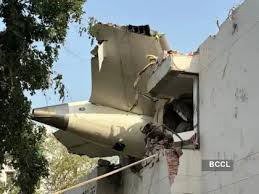
On June 12, 2025, the skies over Ahmedabad turned tragic. A passenger plane, full of everyday lives and everyday dreams, went down shortly after takeoff. In a matter of seconds, conversations were silenced, routines were shattered, and families across the country were left clinging to one question: “What happened up there?”
In the midst of twisted metal and burnt wreckage, there’s one object investigators search for with utmost urgency—the black box.
It doesn’t prevent a crash.
It doesn’t save lives.
But it tells the story no one else can.
What Is a Black Box?
Despite the name, it’s not black. It’s a bright orange cylinder, built to survive what the plane could not.
Each aircraft carries two such recorders:
1. Flight Data Recorder (FDR) – This captures thousands of readings per second from the plane: altitude, airspeed, engine thrust, vertical acceleration, flap settings, and more. It holds the technical heartbeat of the aircraft.
2. Cockpit Voice Recorder (CVR) – This stores the last two hours of cockpit audio: conversations, alarms, background noise, and moments of silence that often say the most.
Together, they don’t just record data.
They record humanity inside technology.
The Invention of the Black Box: A Story Born from Tragedy
The black box, officially known as the flight data recorder, was first conceptualized in the 1950s by Dr. David Warren, an Australian scientist. After witnessing the tragic crash of a Comet jet in 1953 and realizing that investigators had no way of knowing what went wrong, he proposed a device that could record cockpit conversations and flight data. At first, the idea was dismissed, but following a series of crashes, his invention gained attention. Australia became the first country to make black boxes mandatory in 1967. Since then, the black box has become a global aviation standard and a silent witness in nearly every modern aircraft—helping solve mysteries, save lives, and shape the future of flight.
Interesting Facts About the Black Box 1. It’s Not Actually Black Despite the name, the black box is painted bright orange to make it easy to spot in crash debris. The term “black box” is thought to have come from early electronics that were enclosed in black cases, or from its mysterious, almost secretive role in investigations.
2. It Records Over 25 Hours of Data Modern Flight Data Recorders (FDRs) can store 25+ hours of flight data, while Cockpit Voice Recorders (CVRs) typically store the last 2 hours of cockpit audio in a continuous loop, overwriting older recordings.
3. Survival Tests Are Brutal Before approval, black boxes are put through extreme testing: • Fire Test: Exposed to 1,100°C for 1 hour • Impact Test: Crashed with a force of 3,400 Gs • Crush Test: Pressurized by a weight of 2,250 kg • Saltwater Submersion Test: Placed in seawater for 30 days Only if it survives all this, does it go into an aircraft.
4. It Sends a “Ping” Underwater Black boxes come with an Underwater Locator Beacon (ULB) that activates when submerged in water. It sends out an ultrasonic “ping” every second for up to 30 days, helping search teams locate the device even in deep oceans.
5. There’s a Push for Real-Time Streaming After high-profile crashes like Malaysia Airlines Flight MH370, experts began exploring live streaming of critical flight data to satellites in real time—so that even if a black box is never recovered, the data isn’t lost.
6. Some Aircraft Have Dual Recorders Certain planes carry separate recorders in different locations—so if one is destroyed in a crash, the other might still be recoverable. Some even use deployable black boxes that eject during a crash, float on water, and transmit their location.
7. Decoding Takes Time Even when the black box is found, it doesn’t give answers instantly. Teams of aviation experts, engineers, and audio specialists often spend weeks or months analyzing the data—slowing it down, cleaning up sounds, and cross-checking each signal.
The Science Behind Its Strength
To carry the truth through fire, water, and violent impact, the black box is designed using cutting-edge material science and engineering.
1. Survives Fire
• The core memory is shielded by thermal insulation and heat-resistant materials.
• It can withstand temperatures up to 1,100°C for one hour—enough to survive aviation fuel fires.
2. Handles Immense Impact
Protected by titanium or stainless-steel casings, these devices can survive a shock of 3,400 Gs (gravity forces).
3. Waterproof & Pressure-Proof
• If submerged in oceans, lakes, or rivers, the black box can resist water pressures found 20,000 feet below sea level.
• It includes an Underwater Locator Beacon (ULB), which emits sonar “pings” every second for up to 30 days.
4. Advanced Memory Systems
• Unlike traditional hard drives, black boxes use solid-state memory (like high-end SSDs), ensuring no moving parts can fail in extreme conditions.
• The memory stores up to 88+ parameters of flight data and hours of audio in a secure, non-volatile format.
How It Solves the Mystery ?
After a plane crash, most evidence is damaged or lost.
But the black box holds on to the final moments.
Think of it like this—when everything else is broken, the black box is the one thing that remembers.
Here’s how it helps investigators:
• Shows the Flight’s Final Journey
It records how high the plane was, how fast it was flying, and what direction it was going—helping experts recreate the exact path of the plane.
• Tells What the Pilots Faced
It captures the pilots’ voices—what they said, what warnings they heard, and how they reacted in those last few minutes.
• Reveals If Something Went Wrong
It can show if any part of the plane failed—like a sensor stopped working, an engine lost power, or something hit the plane suddenly.
• Checks for Weather Trouble
Storms, air pressure drops, or turbulence—all leave a mark in the black box data.
In short, the black box helps put together the missing pieces of the story—so the world can learn, improve, and fly safer.
Without the black box, the story remains locked in the sky.
With it, we bring truth down to Earth.
As we write this, investigators are combing through debris. The nation waits. Families wait. Answers are few.
But once the black box is recovered and decoded, we may know:
• If there was a sudden technical glitch.
• Whether pilot action or miscommunication played a role.
• If weather, equipment, or a chain of tiny decisions led to tragedy.
It would not undo the loss. But it will give clarity, and perhaps closure.
Why the Black Box Matters ?
The black box is not just a piece of technology.
It is the voice of those who can no longer speak.
It is the witness that survives when nothing else does.
When a plane crash happens, the world mourns. Families are left with pain, confusion, and countless unanswered questions. The black box becomes the bridge between tragedy and truth.
The passengers may never come home.But the black box carries their last journey, their last words, and the last few minutes of their flight.
It makes flying safer for everyone
Thanks to the lessons learned from black boxes:
• Aircraft designs are improved
• Safety rules are updated
• Pilot training is upgraded
• Air traffic systems are refined
Every time something goes wrong, the data recorded helps ensure it won’t go wrong the same way again.
It turns loss into learning
In a world where no machine can bring back lives, this one helps save lives in the future.
Every beep it records, every alarm it captures, every sound it stores—becomes part of a global safety network.
It’s a promise to the flying public
That no matter what happens, we will search for answers.
That we will not forget.
That we will keep making the skies safer—for you, for your family, and for millions of people who fly every day.
The black box is more than just memory. It is a commitment—a quiet, powerful promise that from every loss, we will rise wiser, and fly safer.
A Final Thought
When the sky goes silent,
the black box becomes the voice that echoes through the silence.
It speaks for the mothers, the fathers, the children—
for every life that didn’t get a second chance.
It carries not just data, but dignity,
not just sounds, but stories.
It doesn’t cry, but it remembers.
It doesn’t save, but it teaches.
And in its memory, future lives are protected.
So the next time you fasten your seatbelt,
pause for a moment.
High above the clouds, a small orange guardian flies with you—
listening quietly, learning deeply, and promising this:

 NehaScope
On June 12, 2025, the skies over Ahmedabad turned tragic. A passenger plane, full of everyday lives and everyday dreams, went down shortly after takeoff. In a matter of seconds, conversations were silenced, routines were shattered, and families across the country were left clinging to one question: “What happened up there?”
In the midst of twisted metal and burnt wreckage, there’s one object investigators search for with utmost urgency—the black box.
It doesn’t prevent a crash.
It doesn’t save lives.
But it tells the story no one else can.
What Is a Black Box?
Despite the name, it’s not black. It’s a bright orange cylinder, built to survive what the plane could not.
Each aircraft carries two such recorders:
1. Flight Data Recorder (FDR) – This captures thousands of readings per second from the plane: altitude, airspeed, engine thrust, vertical acceleration, flap settings, and more. It holds the technical heartbeat of the aircraft.
2. Cockpit Voice Recorder (CVR) – This stores the last two hours of cockpit audio: conversations, alarms, background noise, and moments of silence that often say the most.
Together, they don’t just record data.
They record humanity inside technology.
The Invention of the Black Box: A Story Born from Tragedy
The black box, officially known as the flight data recorder, was first conceptualized in the 1950s by Dr. David Warren, an Australian scientist. After witnessing the tragic crash of a Comet jet in 1953 and realizing that investigators had no way of knowing what went wrong, he proposed a device that could record cockpit conversations and flight data. At first, the idea was dismissed, but following a series of crashes, his invention gained attention. Australia became the first country to make black boxes mandatory in 1967. Since then, the black box has become a global aviation standard and a silent witness in nearly every modern aircraft—helping solve mysteries, save lives, and shape the future of flight.
The Science Behind Its Strength
To carry the truth through fire, water, and violent impact, the black box is designed using cutting-edge material science and engineering.
1. Survives Fire
• The core memory is shielded by thermal insulation and heat-resistant materials.
• It can withstand temperatures up to 1,100°C for one hour—enough to survive aviation fuel fires.
2. Handles Immense Impact
3. Waterproof & Pressure-Proof
• If submerged in oceans, lakes, or rivers, the black box can resist water pressures found 20,000 feet below sea level.
• It includes an Underwater Locator Beacon (ULB), which emits sonar “pings” every second for up to 30 days.
4. Advanced Memory Systems
• Unlike traditional hard drives, black boxes use solid-state memory (like high-end SSDs), ensuring no moving parts can fail in extreme conditions.
• The memory stores up to 88+ parameters of flight data and hours of audio in a secure, non-volatile format.
How It Solves the Mystery ?
After a plane crash, most evidence is damaged or lost.
But the black box holds on to the final moments.
Think of it like this—when everything else is broken, the black box is the one thing that remembers.
Here’s how it helps investigators:
• Shows the Flight’s Final Journey
It records how high the plane was, how fast it was flying, and what direction it was going—helping experts recreate the exact path of the plane.
• Tells What the Pilots Faced
It captures the pilots’ voices—what they said, what warnings they heard, and how they reacted in those last few minutes.
• Reveals If Something Went Wrong
It can show if any part of the plane failed—like a sensor stopped working, an engine lost power, or something hit the plane suddenly.
• Checks for Weather Trouble
Storms, air pressure drops, or turbulence—all leave a mark in the black box data.
In short, the black box helps put together the missing pieces of the story—so the world can learn, improve, and fly safer.
Without the black box, the story remains locked in the sky.
With it, we bring truth down to Earth.
As we write this, investigators are combing through debris. The nation waits. Families wait. Answers are few.
But once the black box is recovered and decoded, we may know:
• If there was a sudden technical glitch.
• Whether pilot action or miscommunication played a role.
• If weather, equipment, or a chain of tiny decisions led to tragedy.
It would not undo the loss. But it will give clarity, and perhaps closure.
Why the Black Box Matters ?
The black box is not just a piece of technology.
It is the voice of those who can no longer speak.
It is the witness that survives when nothing else does.
When a plane crash happens, the world mourns. Families are left with pain, confusion, and countless unanswered questions. The black box becomes the bridge between tragedy and truth.
The passengers may never come home.But the black box carries their last journey, their last words, and the last few minutes of their flight.
It makes flying safer for everyone
Thanks to the lessons learned from black boxes:
• Aircraft designs are improved
• Safety rules are updated
• Pilot training is upgraded
• Air traffic systems are refined
Every time something goes wrong, the data recorded helps ensure it won’t go wrong the same way again.
It turns loss into learning
In a world where no machine can bring back lives, this one helps save lives in the future.
Every beep it records, every alarm it captures, every sound it stores—becomes part of a global safety network.
It’s a promise to the flying public
That no matter what happens, we will search for answers.
That we will not forget.
That we will keep making the skies safer—for you, for your family, and for millions of people who fly every day.
The black box is more than just memory. It is a commitment—a quiet, powerful promise that from every loss, we will rise wiser, and fly safer.
A Final Thought
When the sky goes silent,
the black box becomes the voice that echoes through the silence.
It speaks for the mothers, the fathers, the children—
for every life that didn’t get a second chance.
It carries not just data, but dignity,
not just sounds, but stories.
It doesn’t cry, but it remembers.
It doesn’t save, but it teaches.
And in its memory, future lives are protected.
So the next time you fasten your seatbelt,
pause for a moment.
High above the clouds, a small orange guardian flies with you—
listening quietly, learning deeply, and promising this:
No journey will ever be lost in vain.
Share this: