“Try not to become a person of success, but rather try to become a person of value.”
Albert Einstein
Remembering Einstein on his death anniversary.
He died today in 1955, at the age of 76.

His body was moved from the hospital to the funeral home before being cremated in Trenton. His brain was not cremated with the rest of his body–it went missing for years.
Enstein’s cremation was a private affair and no press or media was allowed to take pictures. Only one photographer managed to capture the events of that extraordinary day : LIFE magazine’s Ralph Morse.
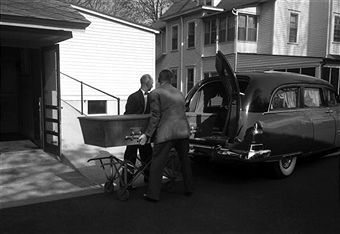
The pictures Morse took that day were never published. At the request of Einstein’s son, who asked that the family’s privacy be respected while they mourned, LIFE’s editors chose not to run the full story, and for more than five decades Morse’s photographs lay in the magazine’s archives, unseen and forgotten.

Einstein’s brain was stolen after his death. Princeton pathologist Thomas Harvey removed his famous brain during his autopsy. Harvey later had the brain cut into pieces and sent to various scientists for research.
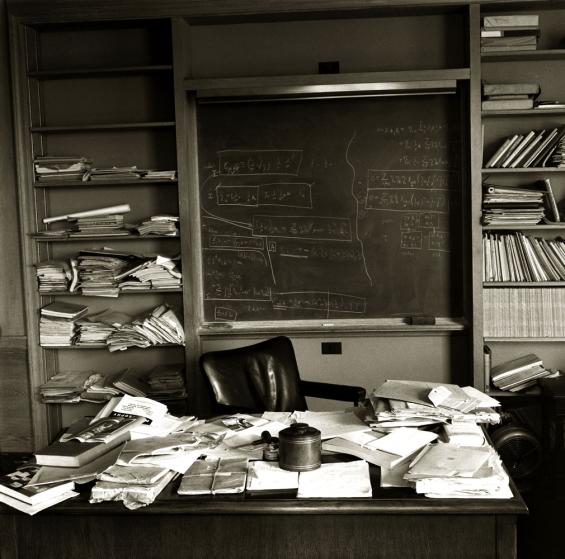
This is one of the pictures of Albert Einstein’s office – just as the Nobel Prize-winning physicist left it – taken mere hours after Einstein died.

Fast Facts :
– Albert Einstein was born on March 14, 1879 in Ulm, in the Kingdom of Württemberg in the German Empire.
– He is best known for his theory of relativity, which revolutionized our understanding of space, time, and gravity.
– Einstein was awarded the Nobel Prize in Physics in 1921 for his discovery of the photoelectric effect, which paved the way for the development of quantum theory.
– He was a dedicated pacifist and spoke out against war, even going as far as to sign the Russell-Einstein Manifesto in 1955, which called for an end to nuclear weapons.
– Einstein was offered the presidency of Israel in 1952, but he turned it down, stating that he lacked the necessary experience and was too old.
– He was known for his unruly hair and absent-minded nature, but he was also a brilliant thinker and had a knack for simplifying complex ideas.
– Albert Einstein passed away on April 18, 1955 at the age of 76.
– He died of an abdominal aortic aneurysm, which is a swelling of the main artery that carries blood from the heart to the rest of the body.
– Einstein refused surgery to treat the aneurysm, stating that he had lived a full life and was ready to accept his fate.
– He was cremated and his ashes were scattered at an undisclosed location, as per his wishes.
– Einstein’s brain was removed during his autopsy without the permission of his family, sparking controversy and leading to further research on his brain’s structure.
– Despite his passing, Einstein’s legacy continues to live on through his groundbreaking scientific theories and contributions to the field of physics.
#Hindi
“सफल व्यक्ति बनने की कोशिश मत करो, बल्कि मूल्यवान व्यक्ति बनने की कोशिश करो।” – अल्बर्ट आइंस्टीन
आइंस्टीन की पुण्यतिथि पर उन्हें याद करते हुए। 1955 में आज ही के दिन, 76 वर्ष की आयु में उनकी मृत्यु हुई थी। उनके शरीर को अस्पताल से श्मशान ले जाया गया और ट्रेंटन में अंतिम संस्कार किया गया। उनके मस्तिष्क को उनके शरीर के साथ नहीं जलाया गया और वह कई वर्षों तक गायब रहा।
आइंस्टीन का अंतिम संस्कार एक निजी समारोह था और किसी भी मीडिया को तस्वीरें लेने की अनुमति नहीं थी। केवल एक फोटोग्राफर, लाइफ मैगज़ीन के राल्फ मोर्स, उस असाधारण दिन की घटनाओं को कैप्चर कर सके। मोर्स द्वारा ली गई तस्वीरें कभी प्रकाशित नहीं हुईं। आइंस्टीन के बेटे के अनुरोध पर, जिन्होंने परिवार की प्राइवेसी का सम्मान करने को कहा, लाइफ के संपादकों ने पूरी कहानी नहीं छापने का निर्णय लिया और मोर्स की तस्वीरें पांच दशकों से अधिक समय तक छिपी रहीं।
आइंस्टीन की मृत्यु के बाद उनका मस्तिष्क चोरी हो गया था। प्रिंसटन के पैथोलॉजिस्ट थॉमस हार्वे ने उनके दिमाग को पोस्टमॉर्टम के दौरान हटा दिया। बाद में, हार्वे ने दिमाग के टुकड़े करके इसे रिसर्च के लिए विभिन्न वैज्ञानिकों को भेज दिया।
यह तस्वीर आइंस्टीन के ऑफिस की है, बिल्कुल वैसे ही जैसे वह छोड़कर गए थे – उनकी मृत्यु के कुछ घंटों बाद की।
कुछ महत्वपूर्ण तथ्य:
- अल्बर्ट आइंस्टीन का जन्म 14 मार्च, 1879 को जर्मनी के उल्म में हुआ था।
- वे अपनी सापेक्षता के सिद्धांत के लिए सबसे ज्यादा जाने जाते हैं, जिसने स्पेस, समय और गुरुत्वाकर्षण की हमारी समझ को बदल दिया।
- 1921 में, उन्होंने फोटोकैलट्रिक इफेक्ट की खोज के लिए भौतिकी में नोबेल पुरस्कार जीता, जिससे क्वांटम थ्योरी का विकास हुआ।
- वे शांतिवादी थे और युद्ध के खिलाफ बोले, यहाँ तक कि 1955 में रसेल-आइंस्टीन मेनिफेस्टो पर हस्ताक्षर भी किए, जो परमाणु हथियारों के अंत का आह्वान करता है।
- 1952 में उन्हें इसराइल के राष्ट्रपति पद की पेशकश की गई, लेकिन उन्होंने इसे अस्वीकार कर दिया क्योंकि वे अनुभवहीन थे और उन्हें लगा कि वे ज्यादा उम्र के हैं।
- वह अपने बिखरे बालों और खोए-खोए स्वभाव के लिए जाने जाते थे, लेकिन वे एक शानदार विचारक भी थे और जटिल विचारों को सरल बनाने की कला जानते थे।
अल्बर्ट आइंस्टीन का 18 अप्रैल, 1955 को 76 वर्ष की आयु में निधन हो गया। उनकी मौत का कारण पेट की मुख्य धमनी का फूला होना था, जो दिल से पूरे शरीर में खून ले जाती है। आइंस्टीन ने कहा कि उन्होंने एक पूर्ण जीवन जिया है और वे अपनी नियति को स्वीकार करने के लिए तैयार थे, इसलिए उन्होंने सर्जरी से इनकार कर दिया। उनका अंतिम संस्कार हुआ और उनकी राख को एक गुप्त स्थान पर बिखेर दिया गया। उनके परिवार की अनुमति के बिना उनके मस्तिष्क को हटा दिया गया, जिससे विवाद उत्पन्न हुआ और उनके मस्तिष्क की संरचना पर आगे के शोध को बढ़ावा मिला।
आइंस्टीन के निधन के बावजूद, उनके वैज्ञानिक सिद्धांत और भौतिकी के क्षेत्र में उनके योगदान के माध्यम से उनकी विरासत आज भी जीवित है।

 NehaScope
Remembering Einstein on his death anniversary.
He died today in 1955, at the age of 76.
His body was moved from the hospital to the funeral home before being cremated in Trenton. His brain was not cremated with the rest of his body–it went missing for years.
Enstein’s cremation was a private affair and no press or media was allowed to take pictures. Only one photographer managed to capture the events of that extraordinary day : LIFE magazine’s Ralph Morse.
The pictures Morse took that day were never published. At the request of Einstein’s son, who asked that the family’s privacy be respected while they mourned, LIFE’s editors chose not to run the full story, and for more than five decades Morse’s photographs lay in the magazine’s archives, unseen and forgotten.
Einstein’s brain was stolen after his death. Princeton pathologist Thomas Harvey removed his famous brain during his autopsy. Harvey later had the brain cut into pieces and sent to various scientists for research.
This is one of the pictures of Albert Einstein’s office – just as the Nobel Prize-winning physicist left it – taken mere hours after Einstein died.
Fast Facts :
– Albert Einstein was born on March 14, 1879 in Ulm, in the Kingdom of Württemberg in the German Empire.
– He is best known for his theory of relativity, which revolutionized our understanding of space, time, and gravity.
– Einstein was awarded the Nobel Prize in Physics in 1921 for his discovery of the photoelectric effect, which paved the way for the development of quantum theory.
– He was a dedicated pacifist and spoke out against war, even going as far as to sign the Russell-Einstein Manifesto in 1955, which called for an end to nuclear weapons.
– Einstein was offered the presidency of Israel in 1952, but he turned it down, stating that he lacked the necessary experience and was too old.
– He was known for his unruly hair and absent-minded nature, but he was also a brilliant thinker and had a knack for simplifying complex ideas.
– Albert Einstein passed away on April 18, 1955 at the age of 76.
– He died of an abdominal aortic aneurysm, which is a swelling of the main artery that carries blood from the heart to the rest of the body.
– Einstein refused surgery to treat the aneurysm, stating that he had lived a full life and was ready to accept his fate.
– He was cremated and his ashes were scattered at an undisclosed location, as per his wishes.
– Einstein’s brain was removed during his autopsy without the permission of his family, sparking controversy and leading to further research on his brain’s structure.
– Despite his passing, Einstein’s legacy continues to live on through his groundbreaking scientific theories and contributions to the field of physics.
#Hindi
“सफल व्यक्ति बनने की कोशिश मत करो, बल्कि मूल्यवान व्यक्ति बनने की कोशिश करो।” – अल्बर्ट आइंस्टीन
आइंस्टीन की पुण्यतिथि पर उन्हें याद करते हुए। 1955 में आज ही के दिन, 76 वर्ष की आयु में उनकी मृत्यु हुई थी। उनके शरीर को अस्पताल से श्मशान ले जाया गया और ट्रेंटन में अंतिम संस्कार किया गया। उनके मस्तिष्क को उनके शरीर के साथ नहीं जलाया गया और वह कई वर्षों तक गायब रहा।
आइंस्टीन का अंतिम संस्कार एक निजी समारोह था और किसी भी मीडिया को तस्वीरें लेने की अनुमति नहीं थी। केवल एक फोटोग्राफर, लाइफ मैगज़ीन के राल्फ मोर्स, उस असाधारण दिन की घटनाओं को कैप्चर कर सके। मोर्स द्वारा ली गई तस्वीरें कभी प्रकाशित नहीं हुईं। आइंस्टीन के बेटे के अनुरोध पर, जिन्होंने परिवार की प्राइवेसी का सम्मान करने को कहा, लाइफ के संपादकों ने पूरी कहानी नहीं छापने का निर्णय लिया और मोर्स की तस्वीरें पांच दशकों से अधिक समय तक छिपी रहीं।
आइंस्टीन की मृत्यु के बाद उनका मस्तिष्क चोरी हो गया था। प्रिंसटन के पैथोलॉजिस्ट थॉमस हार्वे ने उनके दिमाग को पोस्टमॉर्टम के दौरान हटा दिया। बाद में, हार्वे ने दिमाग के टुकड़े करके इसे रिसर्च के लिए विभिन्न वैज्ञानिकों को भेज दिया।
यह तस्वीर आइंस्टीन के ऑफिस की है, बिल्कुल वैसे ही जैसे वह छोड़कर गए थे – उनकी मृत्यु के कुछ घंटों बाद की।
कुछ महत्वपूर्ण तथ्य:
अल्बर्ट आइंस्टीन का 18 अप्रैल, 1955 को 76 वर्ष की आयु में निधन हो गया। उनकी मौत का कारण पेट की मुख्य धमनी का फूला होना था, जो दिल से पूरे शरीर में खून ले जाती है। आइंस्टीन ने कहा कि उन्होंने एक पूर्ण जीवन जिया है और वे अपनी नियति को स्वीकार करने के लिए तैयार थे, इसलिए उन्होंने सर्जरी से इनकार कर दिया। उनका अंतिम संस्कार हुआ और उनकी राख को एक गुप्त स्थान पर बिखेर दिया गया। उनके परिवार की अनुमति के बिना उनके मस्तिष्क को हटा दिया गया, जिससे विवाद उत्पन्न हुआ और उनके मस्तिष्क की संरचना पर आगे के शोध को बढ़ावा मिला।
आइंस्टीन के निधन के बावजूद, उनके वैज्ञानिक सिद्धांत और भौतिकी के क्षेत्र में उनके योगदान के माध्यम से उनकी विरासत आज भी जीवित है।
Share this: